Heritage · 1840 to now
How Monty got its name, and its village
Montmorency wears a French name on a very Australian patch of bushland. Here is how a farming estate ended up as one of Melbourne's leafiest suburbs.
First people
Long before the farm or the railway, this was the Country of the Wurundjeri-willam people, who lived along the Plenty River and through the surrounding bush.
A farm with a French name
The suburb is named after the Montmorency Estate, a farm of around 925 acres that ran between Greensborough and Eltham. The estate borrowed its name from Montmorency in Val-d'Oise, France, where the philosopher Jean-Jacques Rousseau lived for a time. The man who held the land from about 1840, Stuart Donaldson, later became the first Premier of New South Wales.
From orchards to a township
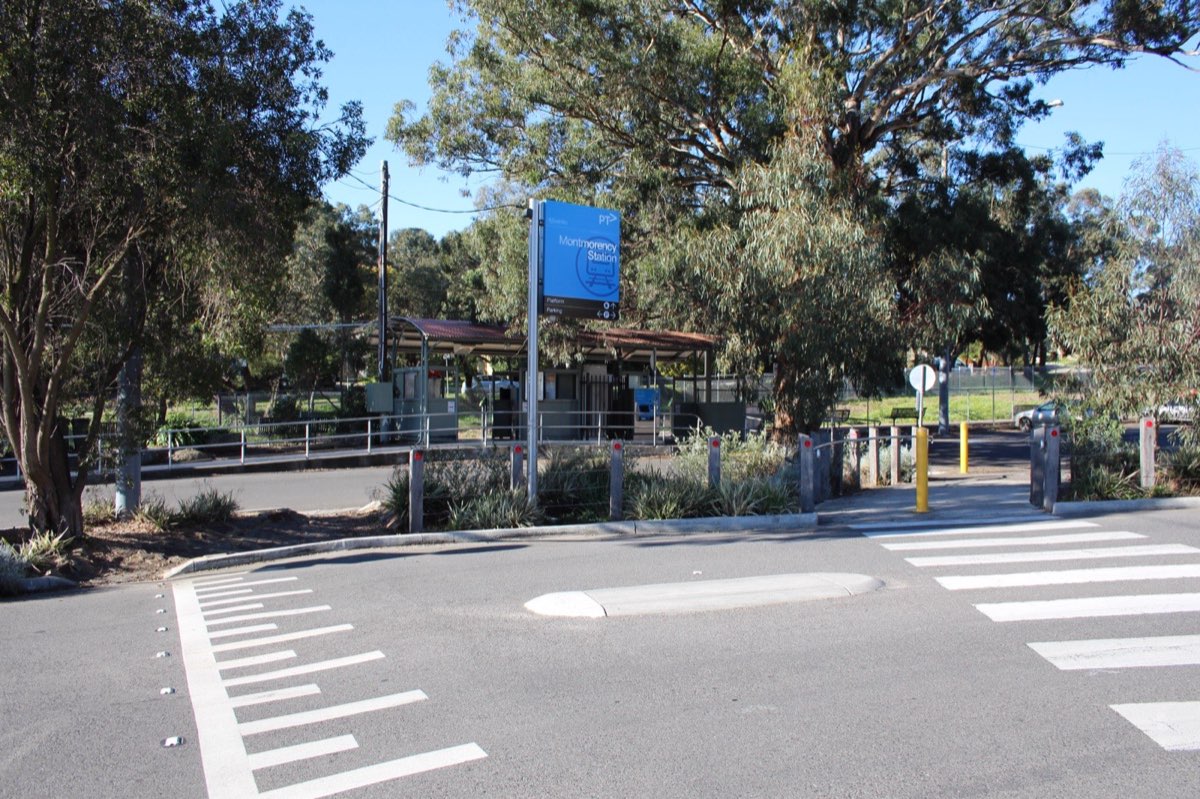
The first real sign of a town was a Presbyterian church, built in 1917 among the paddocks. A primary school followed in 1922, and the railway station opened the next year. Power arrived in 1926. Even then, Monty stayed mostly orchards, dairy farms and poultry runs until after the Second World War. The 1950 population was about 600. By the end of that decade it had grown five times over, and the suburb you see today took shape.
The village on the hill
Were Street has always been the centre of things, climbing from the station up to the top of the hill. One thing locals are quietly proud of: you will find very few chain stores on the strip, and the traders association has a real arts streak that shows up in the details.
The windmill and the mosaics
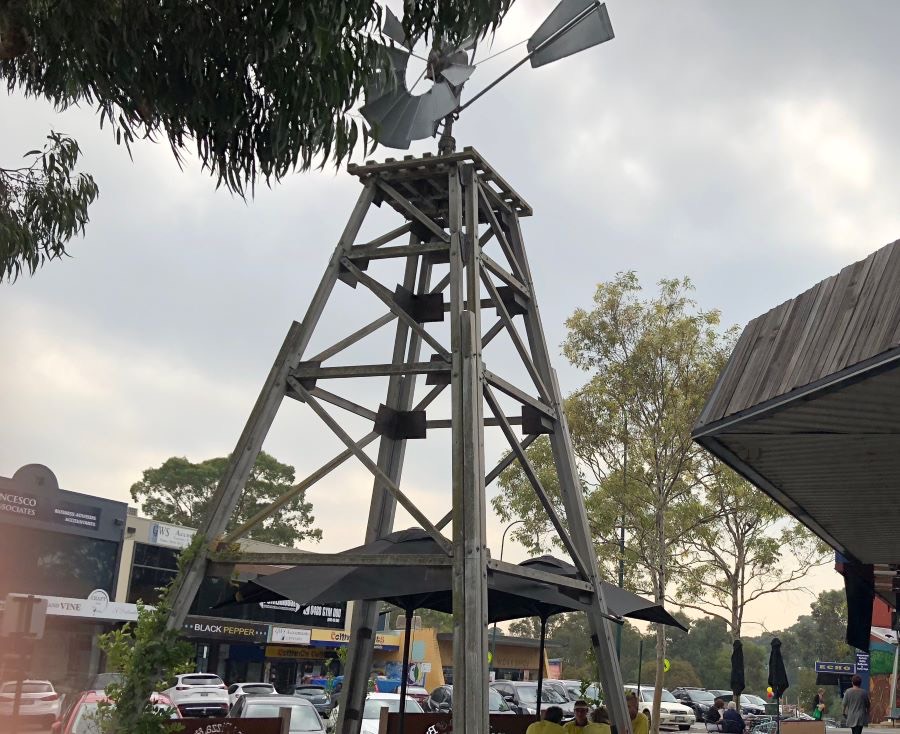
Two features give the village its character. At the top of the hill, on the corner of Were Street and Rattray Road, stands a three-storey ornamental windmill. It has never ground a bag of flour; it is a decorative landmark, the thing that gives Monty its skyline and an easy "meet you at the top" for anyone who grew up here.
Then there is what is underfoot. The Were Street footpaths are set with mosaics made with the community, small tiled artworks that pick up scenes and stories from the suburb's oral history as you walk the hill. They are part of the same arts streak behind the live music and street events, and they reward looking down as much as looking up. Together the windmill and the mosaics are the closest thing Monty has to a town crest.
Monty today
The suburb sits in the City of Banyule, about 18 km from the CBD, with a population of roughly 9,250 at the 2021 census. The station was rebuilt in 2023. And the musician Gotye grew up here, in case it ever comes up at trivia.